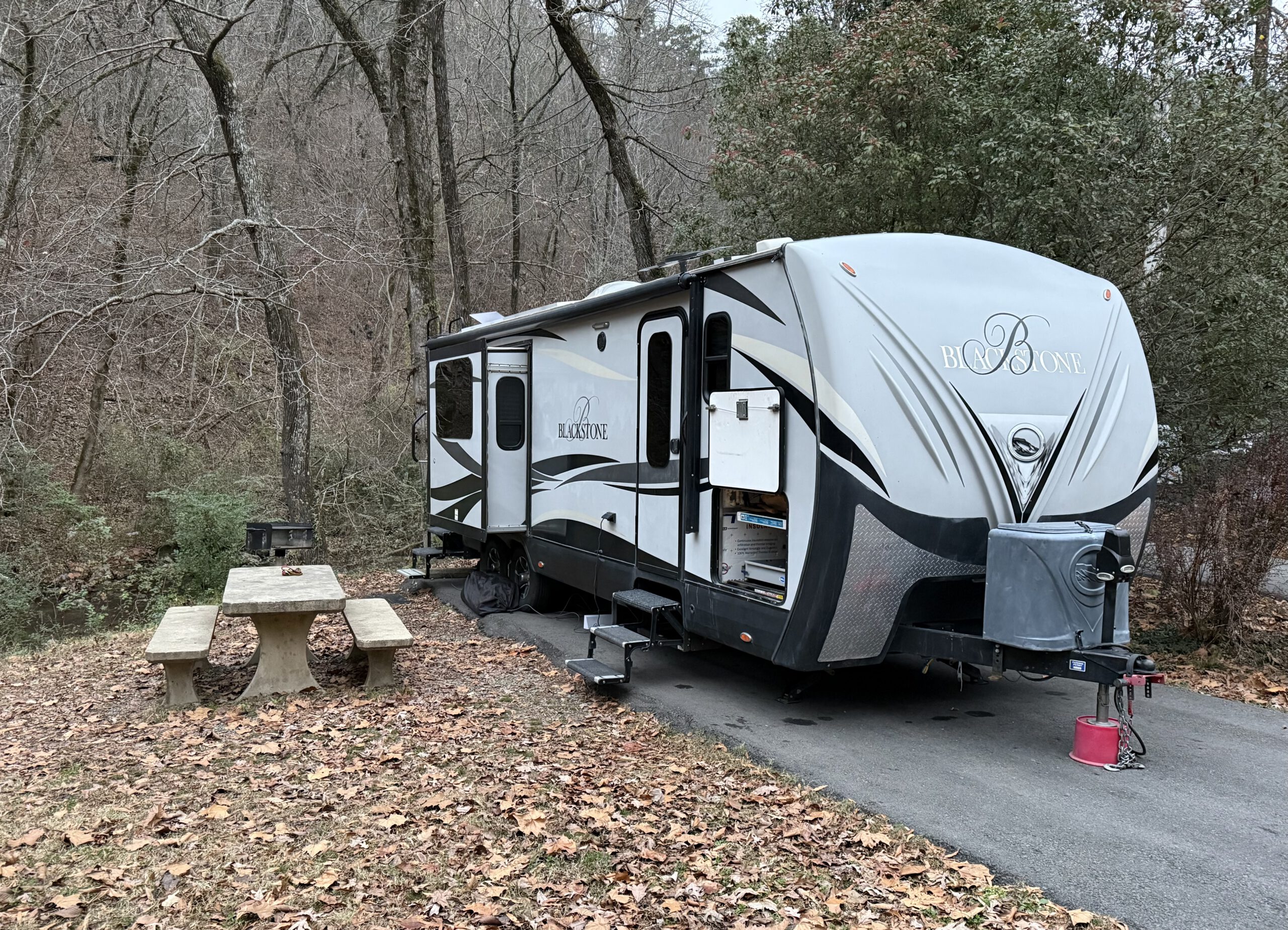
On Tuesday, December 2, 2025, we pulled up stakes in Ozark, Arkansas, and headed southeast for a couple of hours, rolling into Hot Springs National Park in the early afternoon. We claimed Site 28 in the Gulpha Gorge Campground—a lovely spot tucked right up against Gulpha Creek. The gentle gurgling of the stream was the perfect soundtrack while sitting inside the trailer. I could easily imagine kids in summer splashing around to keep cool… though here in December, the only thing getting splashed is whoever forgets to pump the brakes before stepping outside.
The area is beautiful, though the campsites are cozied up a bit closer than we prefer. Not quite “borrow-a-cup-of-sugar-through-your-RV-window” close, but close enough that we were grateful it was too cold to spend much time outside. Winter camping: come for the solitude, stay because everyone else is smart enough to be indoors.
On December 3rd, we bundled up in multiple layers—some functional, some purely emotional—and set off to explore the park. Hot Springs is a bit of an odd duck among national parks. It includes the historic bathhouses on one side of the city street, but not the businesses directly across from them. It’s the country’s oldest federally protected area, dating back to the 1830s, when people were convinced the hot springs could cure anything short of bad dancing. Wounded veterans from the Civil War through World Wars I and II came for therapeutic treatment until the military hospital finally closed in the 1980s.
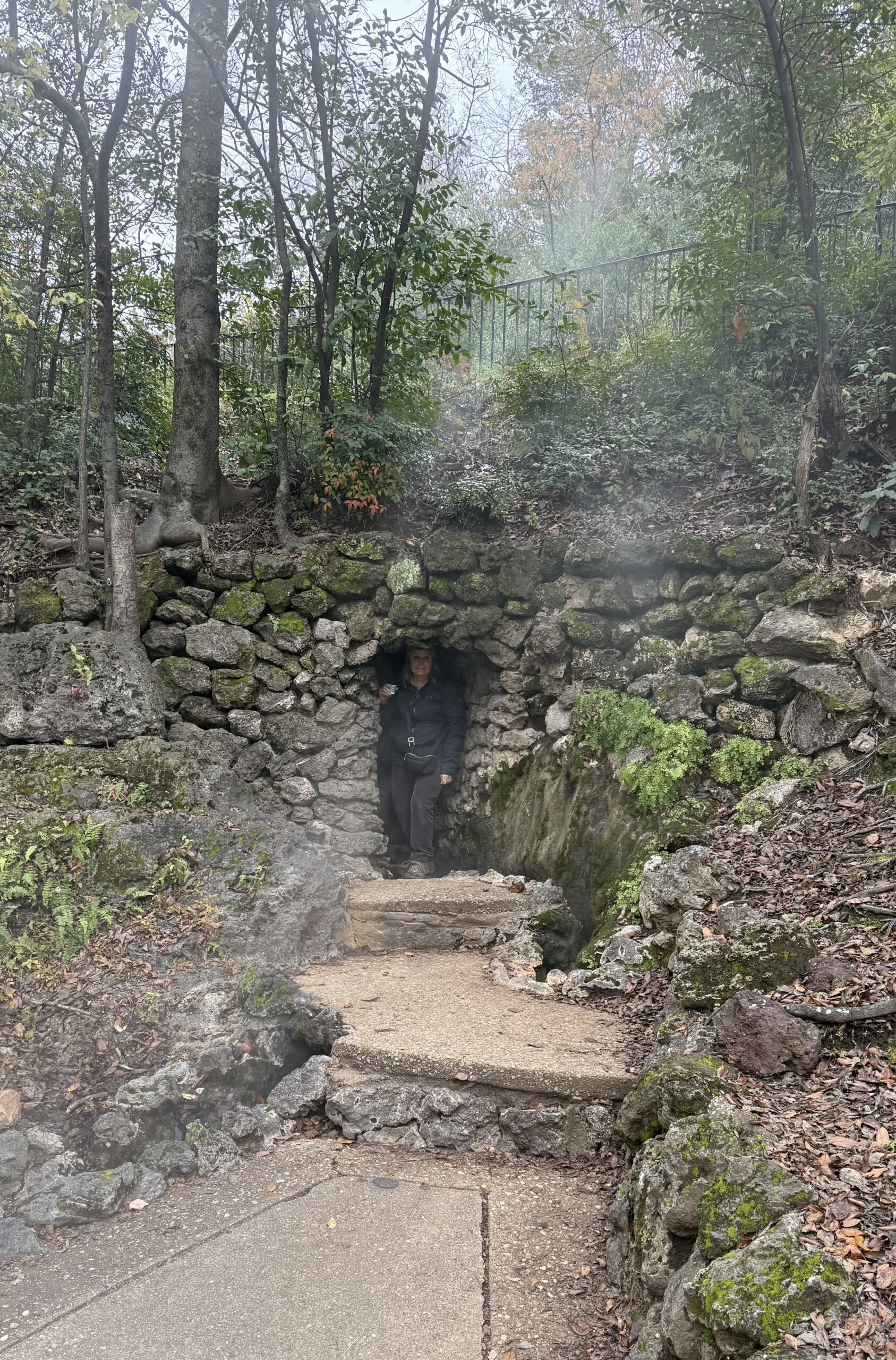
The hot water itself begins several thousand feet underground, where it’s warmed by bedrock, then rises to the surface and politely exits the mountainside. Early settlers wrangled it into channels feeding the bathhouses, where the sick, the wealthy, the weary, and the “colorful characters” of the early 1900s all showed up to be restored, revived, or at least somewhat deodorized. Some of the original wooden bathhouses burned in the 1800s, so the newer steel-and-brick versions have held up far better.
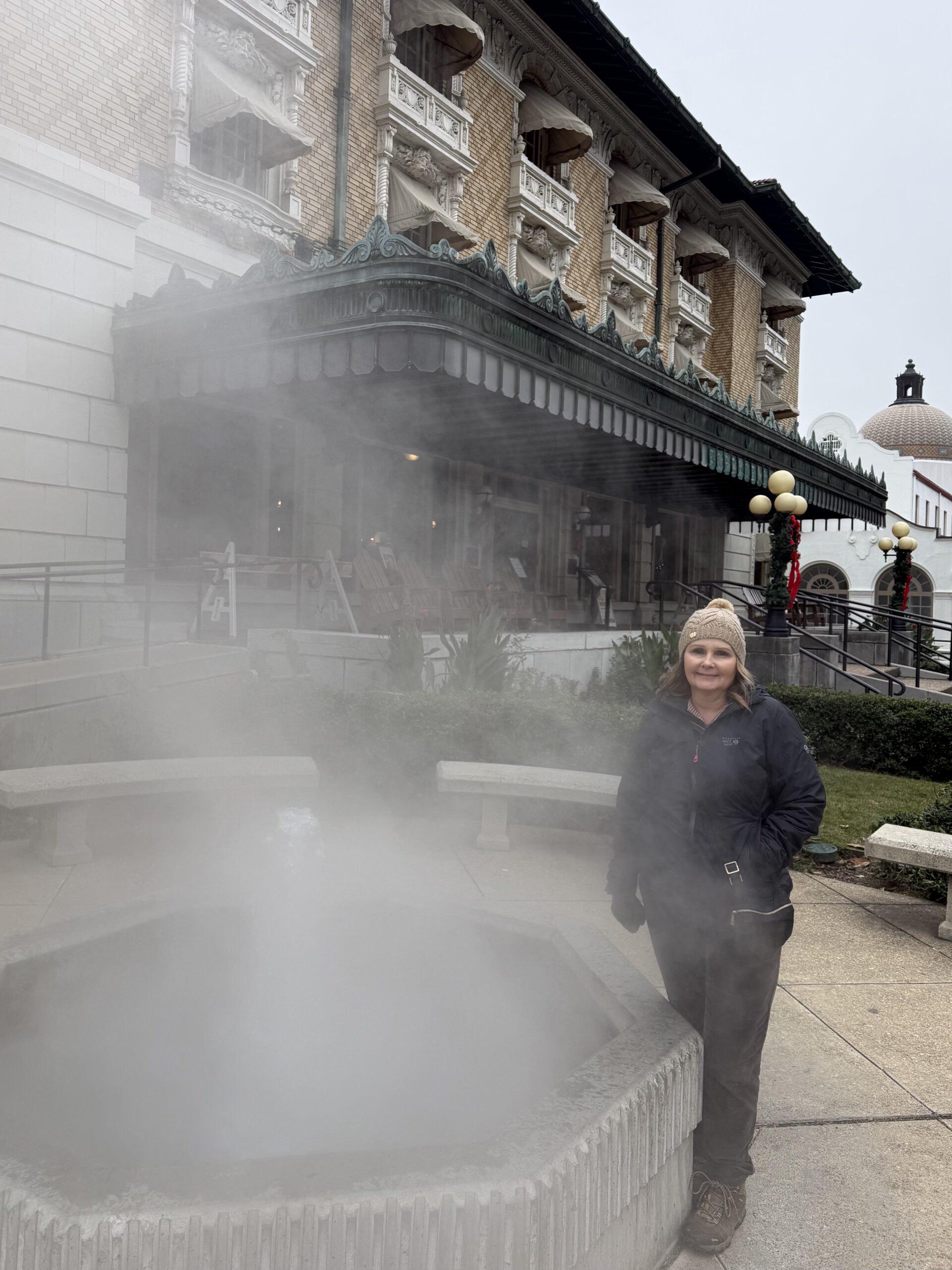
We ducked gratefully into the Fordyce Bathhouse Visitors Center, appreciating both its exhibits and its superior indoor temperature. Outside, steam from the fountains drifted through the cold air like nature’s own smoke machine. Behind the bathhouses, a drinking fountain lets you sample the hot spring water. To our surprise, it tasted remarkably good—none of the rotten-eggs aroma that often accompanies geothermal features. Turns out the water here is heated by rocks, not volcanoes, which feels like a nice, safe distance from drama.
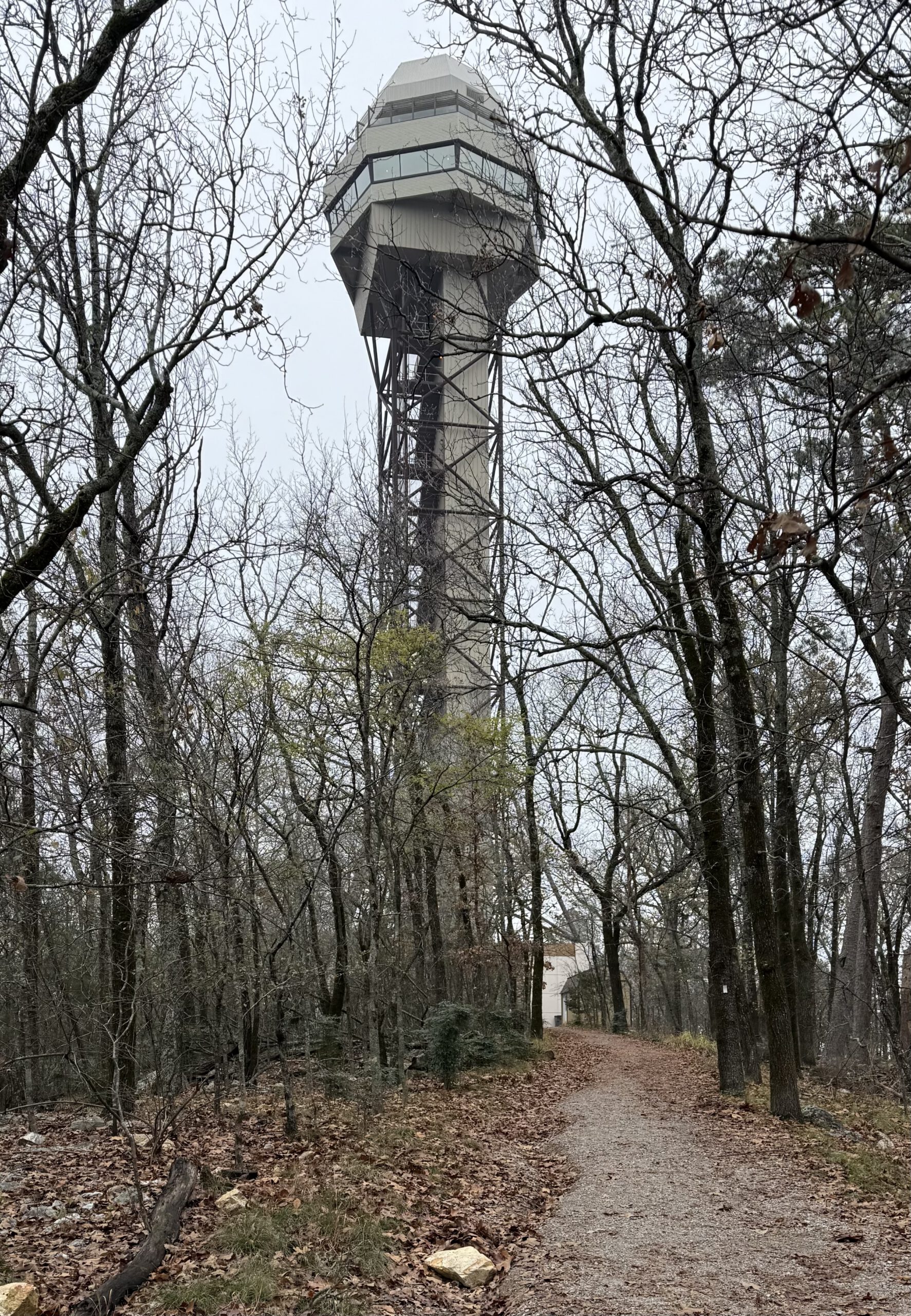
After finishing our self-guided spa history tour, we followed a trail network up the mountain. At the summit sits a 200-foot observation tower. We paid the fee, rode the elevator to the museum level, and enjoyed a warm space with panoramic views. Then we climbed the stairs to the open-air deck, where we amused ourselves by breaking sheets of ice off the railings and listening to them click and clatter all the way down. Simple pleasures.
Back at bathhouse row, we ducked into Superior Bathhouse Brewery for lunch. The food was tasty, but the warmth was the real selling point. Their house-made root beer—crafted from the actual spring water—was a fun touch and tasted great.
On December 4th, we rose early, packed up the trailer, and pulled out around 9 a.m., aiming to beat the rain on our way to Mississippi. Naturally, the weather forecast was spectacularly wrong, and we instead drove through steady rainfall most of the day. It kept coming long after we’d parked, leveled, and hunkered down inside—but at least we were warm, dry, and grateful not to be setting up camp by flashlight in a downpour.
| Nights | Total Nights | Miles | Total Miles |
|---|---|---|---|
| 2 | 315 | 115 | 29446 |