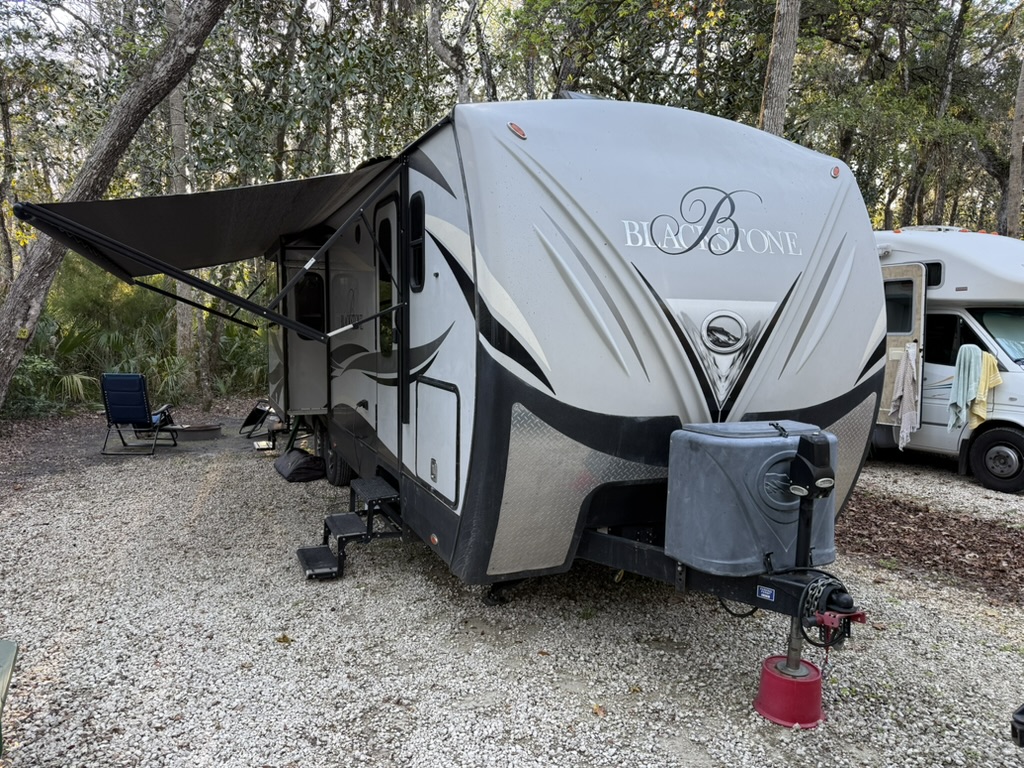
After leaving Everglades National Park on Monday, March 2, we drove north for about six hours to the quiet Chassahowitzka River Campground on Florida’s Nature Coast. The campground sits directly along the clear spring-fed Chassahowitzka River, with a small boat ramp just a short walk from the campsites. The campground and boat ramp feel more remote than they are; the place is only a few minutes out of town.
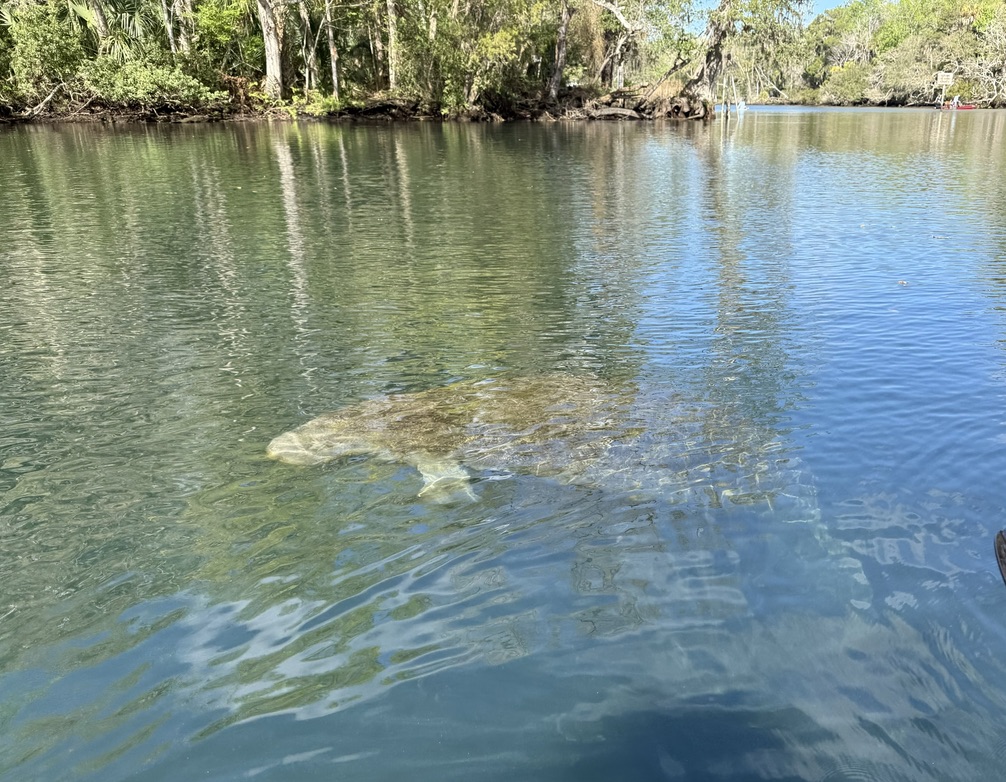
We came here for only one purpose, to kayak with manatee. On the morning of March 3 we carried our kayaks down to the launch and pushed off around 9:00 a.m. Before we had even begun paddling, we were surrounded by manatees. Several large animals surfaced quietly near the ramp, rolling just beneath the water before lifting their noses for a breath and slipping back under again. They seemed completely comfortable around the boats and kayaks drifting nearby.
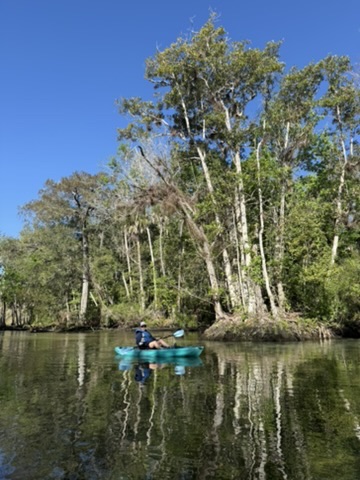
The Chassahowitzka is a beautiful river—clear water flowing over a sandy bottom, bordered by palms, cypress, and dense Florida vegetation. The river is also tidal because it connects to the Gulf of Mexico several miles downstream, so the current changes direction throughout the day.
As we paddled upstream for a while, we kept noticing large fish launching themselves from the water. Some of them jumped three feet into the air and did it two or three times in rapid succession. We never got a clear look at them, but they were almost certainly mullet, a coastal fish known for their dramatic jumping displays.
After exploring upstream we turned and paddled downriver a couple of miles with the outgoing tide helping push us along. The current made the paddling almost effortless and the river gradually widened as it flowed toward the coastal marshes and the Gulf beyond.
Eventually we turned around and headed back toward the campground. That is when we realized how much work the tide had been doing for us earlier. Now we were paddling directly against the current.
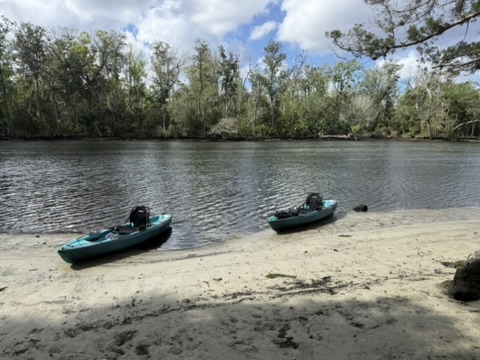
Instead of fighting it, we pulled our kayaks onto a quiet stretch of riverbank and decided to stop for lunch. The sun was warm, the river was calm, and before long we were stretched out on our kayaks enjoying a peaceful nap.
A couple of weeks earlier we probably would have been nervous stopping along a forested riverbank in Florida because of alligators and other southern creatures. But after spending some time here we have learned that wildlife behaves much like it does anywhere else. Seeing an American Alligator here is a little like seeing a deer back home in Utah. People point them out to each other and watch them for a moment, but no one panics and runs away. Like most wild animals, they generally want nothing to do with people.
After resting for a while the tide became slack, the short period when the river current slows before reversing direction. With the current no longer pushing against us, the paddling back to the launch became much easier.
By mid-afternoon we arrived back at the boat ramp where we had started. The manatees were still there, slowly surfacing and rolling in the warm spring water near the dock as if they owned the place—which, of course, they do.
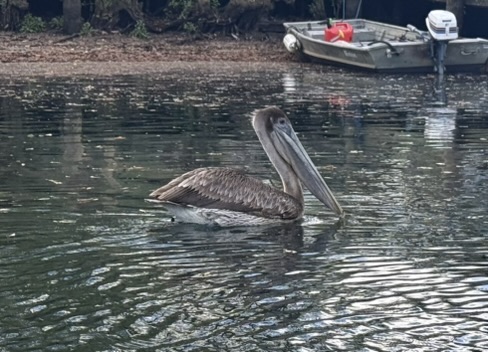
We watched them for a while longer before loading the kayaks and walking back to camp. It had been a wonderful day on the river—clear water, abundant wildlife, and the quiet beauty that seems to define Florida’s spring-fed rivers.
That evening we enjoyed a peaceful night at camp and prepared for the next leg of the trip. The following morning, March 4, 2026, we packed up and headed to our next destination along the Florida Panhandle.
| Nights | Total Nights | Miles | Total Miles |
|---|---|---|---|
| 2 | 366 | 358 | 31940 |