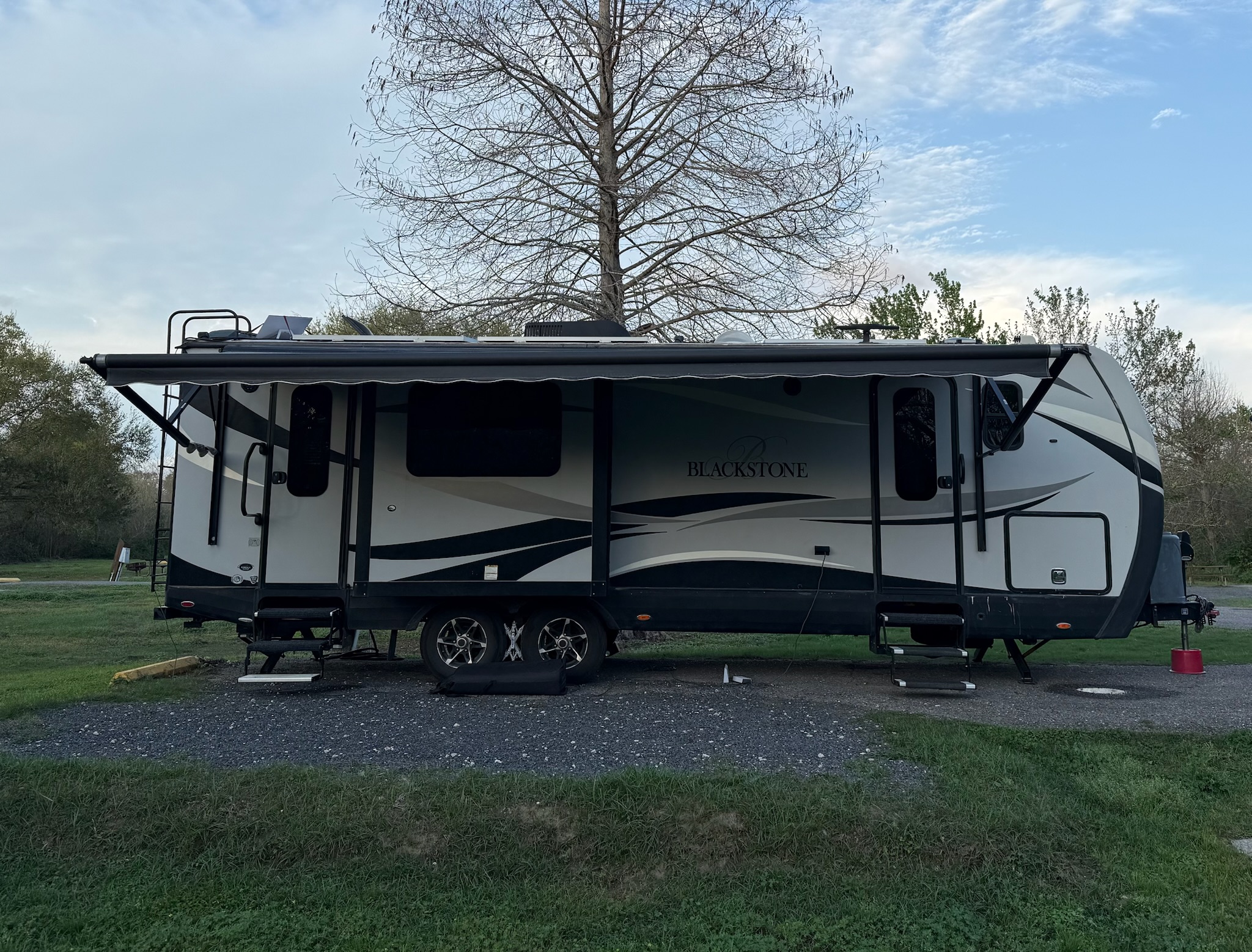
On March 9, 2026, we hitched up the trailer and pointed the truck west toward Bayou Segnette State Park just outside New Orleans, Louisiana. The drive was uneventful, which in the RV world counts as a minor miracle. We landed at Site 42, and Linda—who by now backs a trailer with the calm precision of an aircraft carrier captain—slipped the rig neatly into place.
Just behind our site stood a tall radio tower. Mounted on it were what looked to me like a couple of small wireless antennas. I only noticed because when I went to use the wireless remote for lowering the stabilizer jacks, the thing behaved like it had stage fright. Sometimes it worked perfectly. Sometimes it ignored me entirely. My first thought was the battery, so I plugged the remote in and charged it up. The problem seemed to persist, though, and I began to wonder if those antennas were somehow interfering with the signal. It felt a little like parking your RV next to NASA and wondering why your garage door opener suddenly thinks it’s part of a space launch.
After getting settled we kept the evening simple. Dinner, a little studying, some television, and a bit of planning for our one-day blitz through New Orleans. When you only have a single day in a city with three centuries of history, you quickly learn to prioritize.
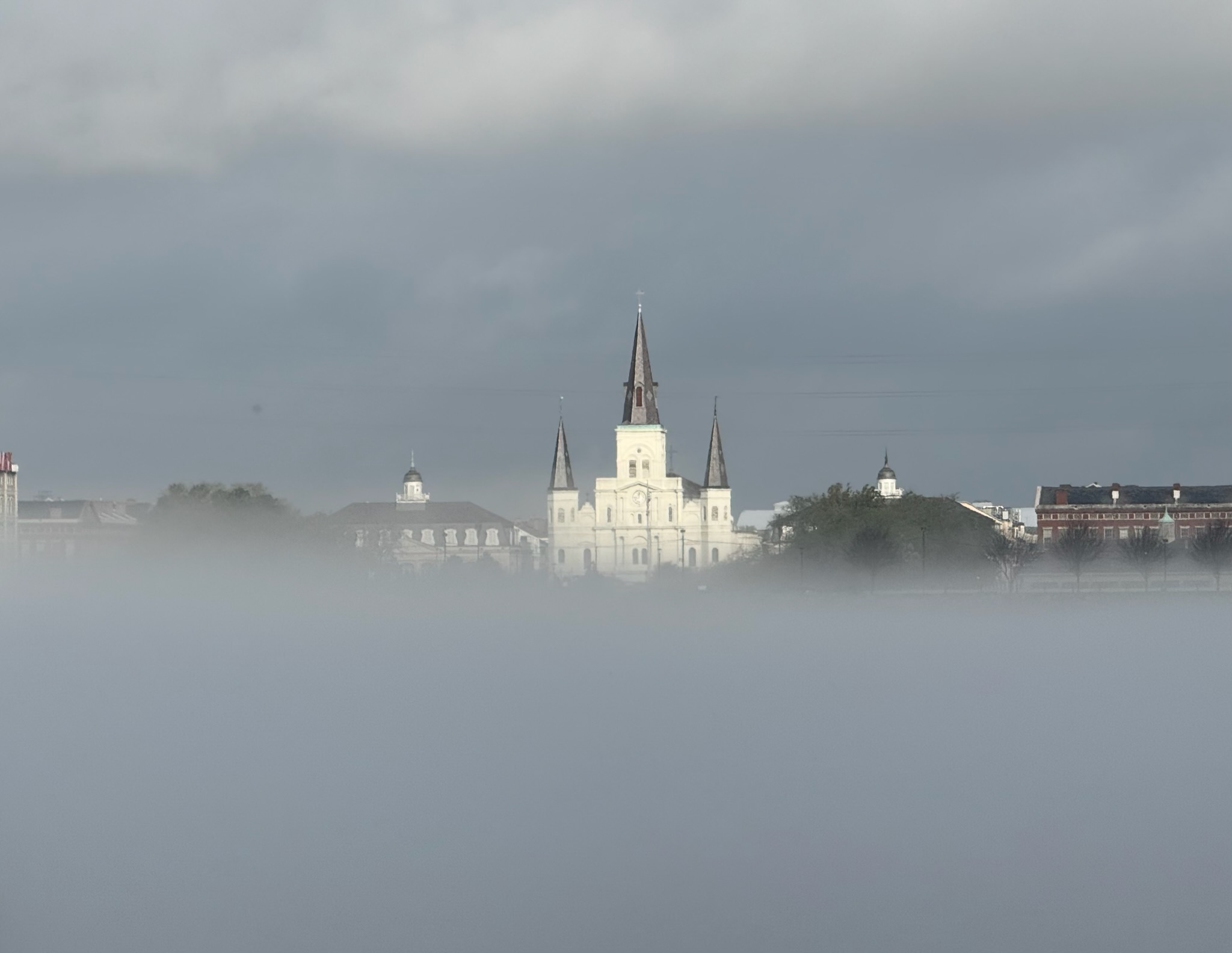
The next morning, March 10, we rose early and called an Uber to take us to the ferry in Algiers Point so we could cross the Mississippi River. The plan sounded elegant and very New Orleans-ish. Unfortunately, when we arrived we were informed the ferry wasn’t running because of heavy fog on the river. Apparently even ferries prefer to see where they’re going. Plan B was another Uber, this time straight into Jackson Square in the French Quarter.
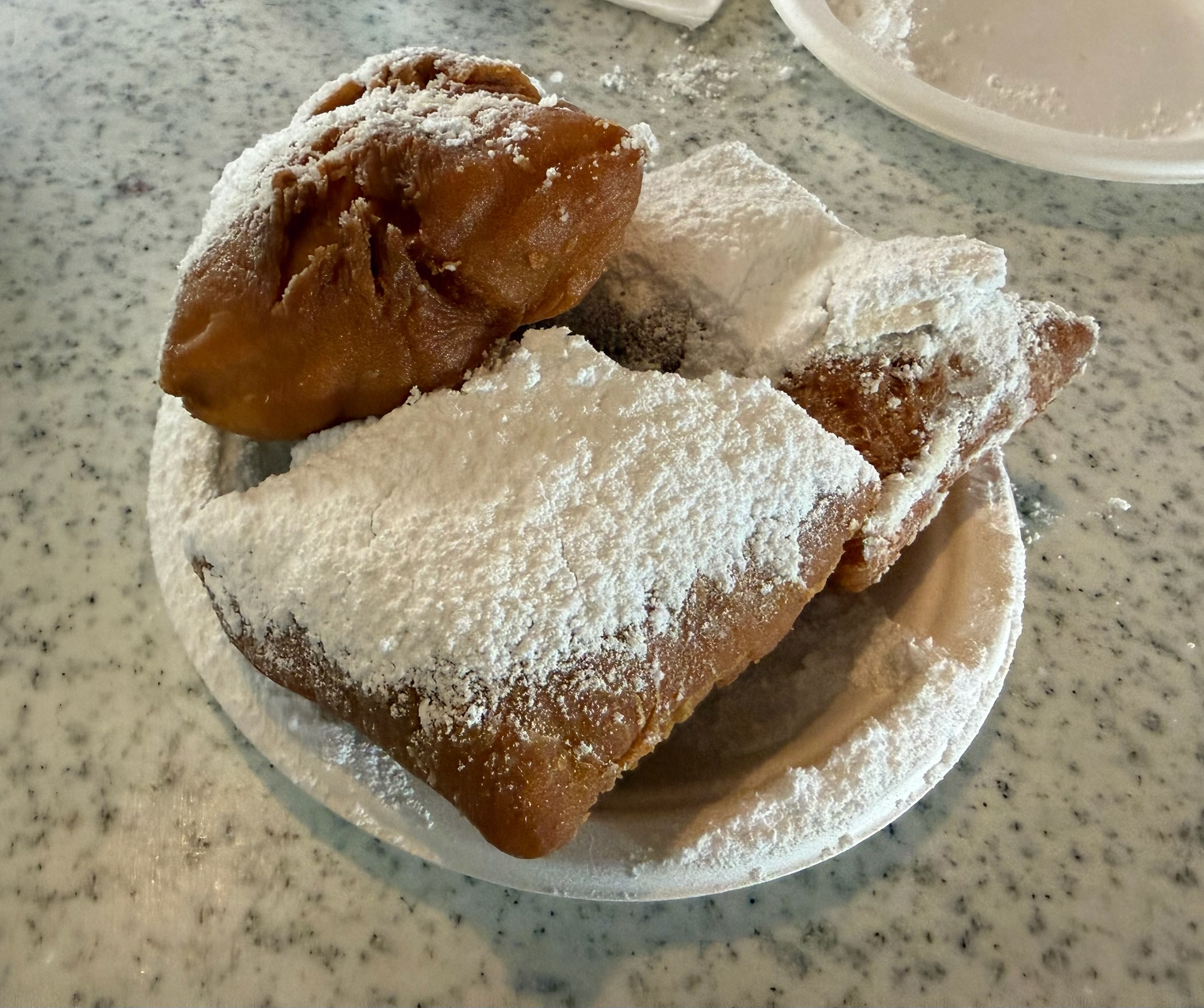
Naturally, the first stop was Café du Monde. If you visit New Orleans and do not eat beignets there, someone may revoke your tourist license. We ordered beignets and water. Beignets are square pieces of fried dough buried under a blizzard of powdered sugar. Café du Monde’s menu is famously simple—beignets and coffee—and they still operate on a cash-only basis. The system has worked since 1862, so I suppose they see no need to complicate things.
After our “gourmet” breakfast we stepped next door into St. Louis Cathedral, the oldest continuously active Roman Catholic cathedral in the United States. The present structure dates to 1850, though earlier churches stood on the same site going back to 1718 when New Orleans was founded. Inside we admired the stained glass and paintings for a few minutes before wandering outside again.

From there we climbed up onto the levee to look out over the Mississippi. The fog that had shut down the ferry had finally lifted. Moored nearby was the famous Steamboat Natchez, one of the last authentic sternwheel steamboats operating on the river. We briefly considered the two-hour cruise and then concluded that, for us at least, walking around the city sounded more appealing than floating past it. So we began wandering.
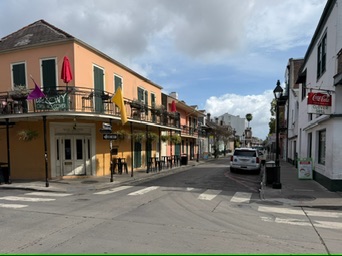
We walked up St. Peter Street to Royal Street, turned right, and strolled for several blocks past galleries, iron balconies, and musicians setting up for the day. Eventually we angled over to Bourbon Street. Visiting Bourbon Street at mid-morning is a completely different experience than the version you see on television at midnight. The street was calm, the balconies were quiet, and the only thing stirring were sober tourists like us.
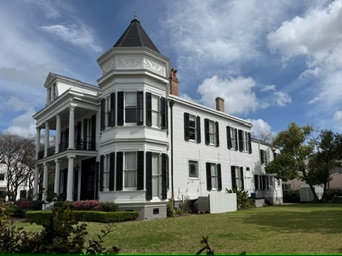
At Canal Street we hopped aboard the historic green St. Charles Streetcar Line. The line has been running since 1835 and is the oldest continuously operating streetcar line in the world. The ride down St. Charles Avenue is like gliding through a moving museum of southern architecture. We got off near Washington Avenue and wandered through neighborhoods of grand mansions, peeked into a historic cemetery, and eventually landed at Joey K’s Restaurant & Bar for lunch. Joey K’s is the sort of place where the food arrives generous, the people are friendly, and no one is trying to reinvent shrimp.
After lunch we missed the next streetcar and decided to Uber back toward Jackson Square. We browsed a few shops, wandered down Canal again, and then hopped onto a red Canal Streetcar Line. We rode it all the way out toward New Orleans City Park and then turned around and rode it back. The air conditioning alone justified the excursion.
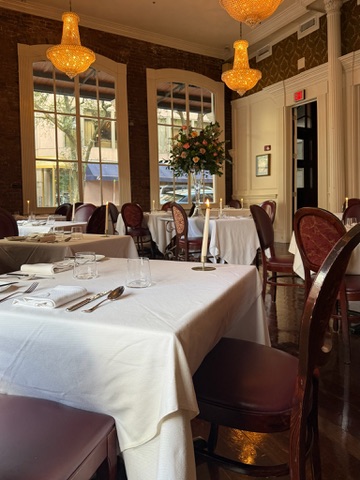
Dinner that evening was at Restaurant August, a Michelin-recommended restaurant not far from the river. We arrived a little before 5:00 p.m., only to discover they weren’t quite open yet. When the host came to the door I asked if there might be a quiet corner where they could hide two tourists wearing shorts and clearly not dressed for the sort of elegance the restaurant usually sees. She smiled and said not to worry about it, come on in.
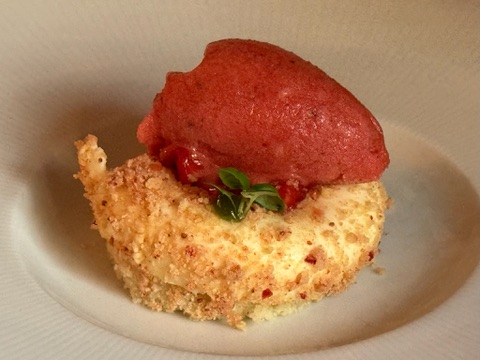
Inside, we ordered the four-course menu and selected from three choices for each course. Neither French nor Southern cuisine is normally at the top of our list, so we approached the meal with a spirit of adventure. The service was impeccable. Some courses delighted us more than others, but the beef, duck, shrimp, and strawberry shortcake were genuinely exceptional. Even when a dish wasn’t exactly our style, it was fascinating to see the creativity behind it. Dining there felt a little like attending a culinary concert.
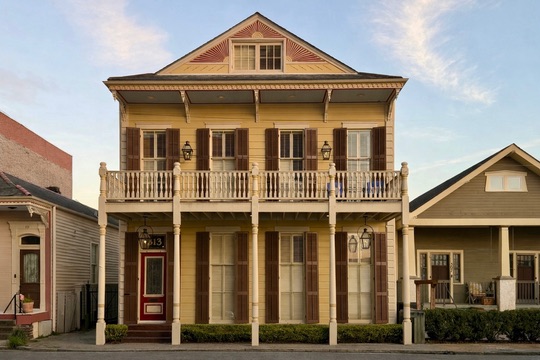
After dinner we hurried back toward the ferry landing. We stepped aboard just as it was preparing to leave—perfect timing. The boat pushed off across the Mississippi and delivered us back to Algiers. We walked along the levee for a few minutes, admired the nighttime view of New Orleans across the river, and then called an Uber back to our campsite. It was an outstanding day.
Like any large city, New Orleans rewards visitors who are thoughtful about where they go and when they go there. By sticking to well-traveled areas and moving through the city during the daytime and early evening, we felt comfortable and safe the entire time.
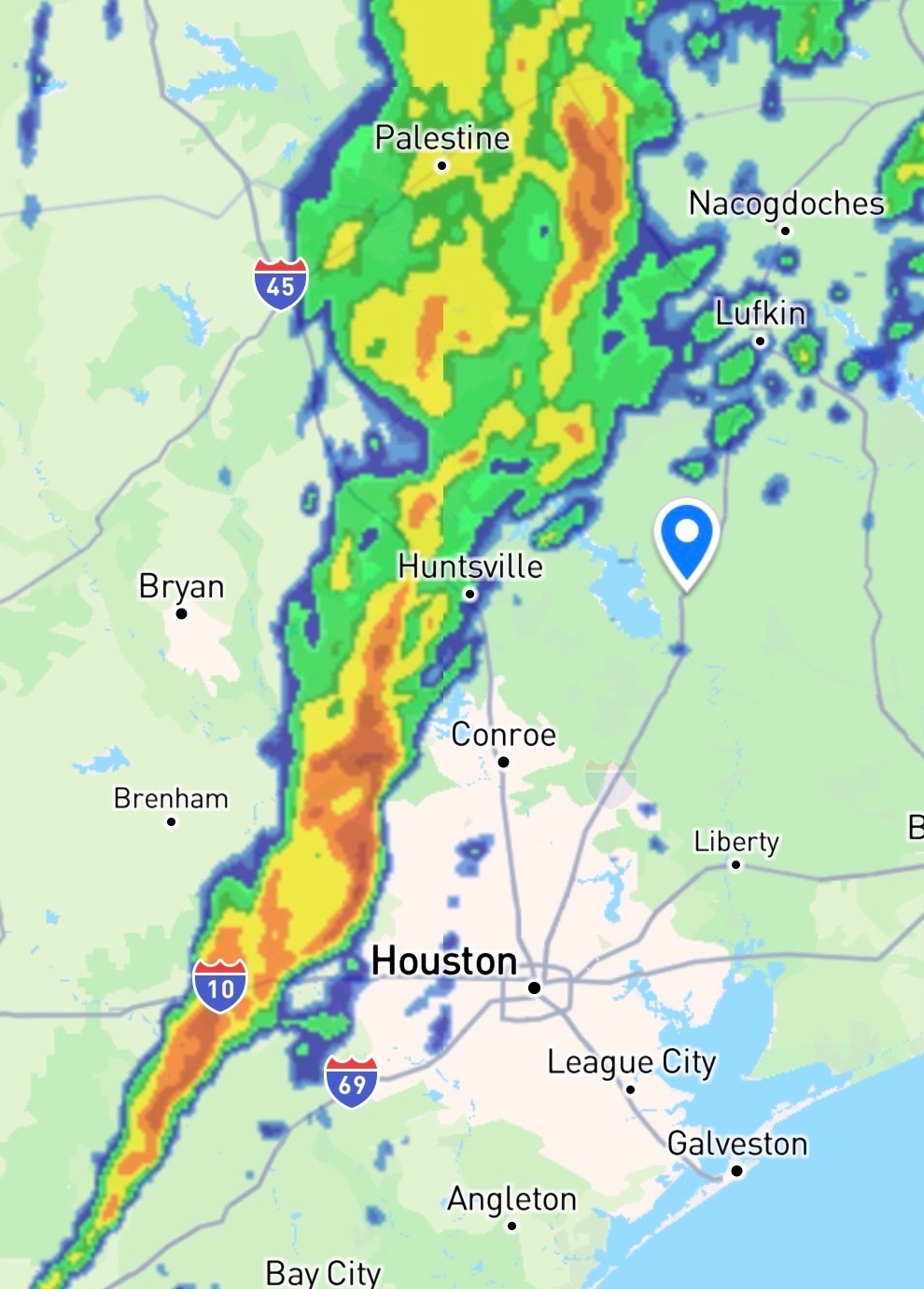
The next morning, March 11, we woke early and prepared to roll out. The biggest concern wasn’t traffic—it was the weather. Severe thunderstorms were marching across the region with forecasts mentioning supercells, hail, and even possible tornadoes. Traveling with a 27-foot trailer is not the ideal hobby during tornado season.
We watched the radar carefully, said a prayer or two, and threaded our way between the worst of the storms. With heaven’s help, we slipped through the gaps between the red and purple blobs on the radar map. When we reached the other side of the storm front, it felt like we had just completed a small but satisfying victory lap.
| Nights | Total Nights | Miles | Total Miles |
|---|---|---|---|
| 2 | 373 | 212 | 32549 |